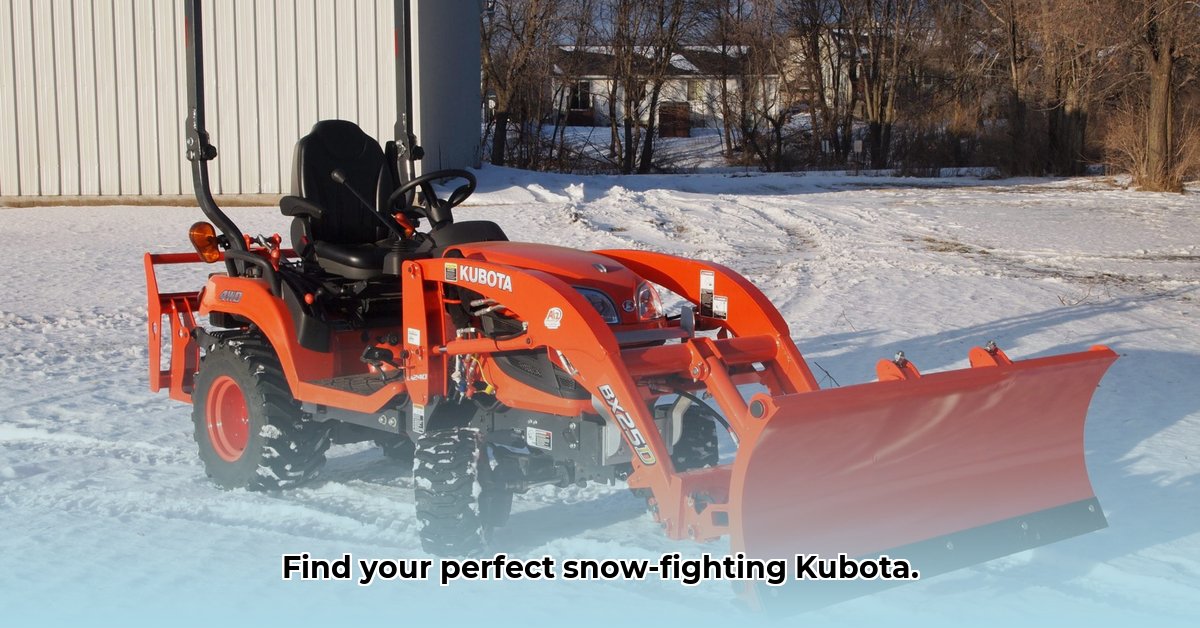
Choosing the Right Snow Plow
Finding the right snow plow for your Kubota tractor is crucial for efficient and safe snow removal. This guide simplifies the process, ensuring you make the best choice for your needs and budget. Don't let a confusing selection process leave you stuck in the snow – let's find the perfect match! Learn more about Kubota tractor manufacturing at Kubota Tractor Origins.
Identifying Your Kubota Tractor Model
Before you start shopping, you'll need your Kubota tractor's model number. This crucial piece of information is usually found on a sticker on the tractor itself or in your owner’s manual. Write it down – you’ll need it for compatibility checks.
Checking Plow Compatibility
Once you have the model number, consult the specifications for any snow plow you are considering. Manufacturers clearly list which Kubota models each plow is compatible with. Do not assume compatibility; always verify! A quick call to the manufacturer or your Kubota dealer can prevent costly mistakes.
Understanding Mounting Systems: Quick-Attach vs. Clamp-On
Two main mounting systems exist: quick-attach and clamp-on. Quick-attach systems offer rapid attachment and detachment (typically 1-3 minutes), ideal if you frequently switch between attachments. Clamp-on systems are usually more affordable and offer greater versatility, but installation takes longer. Consider how often you'll be attaching and detaching the plow when making your decision.
Essential Snow Plow Features
Several features enhance both efficiency and safety:
- Angling Capability: This allows you to precisely direct the snow flow, ideal for navigating obstacles and ensuring clean clearing around driveways, buildings, or other structures. The degree of angling (e.g., 25°/25°, 30°/30°, 45°/45°) varies between models; choose a range appropriate for your typical snow conditions and maneuvering needs.
- Spring Trip Mechanism: This crucial safety feature automatically lifts the plow blade if it hits an obstruction, protecting both your tractor and the plow from damage. It's a must-have for safe operation.
- Replaceable Cutting Edges: These significantly reduce the long-term cost of ownership. Replacing the cutting edge is far cheaper than replacing the entire blade when it eventually wears down.
Rhetorical Question: Isn’t safety paramount when dealing with heavy machinery and potentially hazardous winter conditions?
Comparing Snow Plow Models
The following table helps compare key features and specifications of different plow models:
| Plow Model | Size (inches) | Angling | Mounting System | Material | Safety Features | Approximate Price Range ($) |
|---|---|---|---|---|---|---|
| Model A | 60 | 25°/25° | Clamp-on | Steel | Spring trip, replaceable edge | 600 - 800 |
| Model B | 72 | 30°/30° | Quick-Attach | Steel | Spring trip, replaceable edge | 800 - 1000 |
| Model C | 84 | 45°/45° | Quick-Attach | High-strength steel | Spring trip, replaceable edge | 1100 - 1400 |
(Note: Model names and prices are examples. Check manufacturer websites for the most up-to-date information.)
Quantifiable Fact: Quick-attach systems can save up to 10-15 minutes per attachment change compared to clamp-on systems.
Installing Your Snow Plow
Always prioritize safety. Wear heavy-duty gloves and, if necessary, enlist a helper for heavy lifting.
Consult the Manufacturer's Instructions: The manufacturer's instructions are specific to your plow and tractor. Read them thoroughly before starting installation for safe and correct assembly.
Secure the Plow: Carefully and firmly attach the plow, following the manufacturer's instructions. Ensure all bolts and connections are properly tightened. A loose connection can compromise safety and performance.
Test Your Setup: Before tackling any snow, test the plow’s functionality. Raise and lower the blade, and ensure the angling mechanism works correctly. Any issues should be addressed before attempting snow removal.
Maintaining Your Snow Plow
Regular maintenance is crucial for a long-lasting and efficient snow plow.
Regular Inspections: Frequently check all mounting hardware for tightness. Loose bolts are a common cause of problems.
Blade Sharpening: Maintaining a sharp blade ensures efficient snow removal and reduces strain on your tractor. Sharpening should occur annually or as needed, depending on usage.
Proper Storage: Clean the plow thoroughly and store it correctly during the off-season to prevent rust and corrosion. Use a protective coating if storing outdoors.
Troubleshooting Common Snow Plow Issues
Blade Not Angling Correctly: Check hydraulic fluid levels and inspect the angling mechanism for damage or obstructions. A simple adjustment may resolve the issue.
Loose Mounting Hardware: This is a common problem. Regularly check and tighten all bolts and nuts, replacing any damaged or worn components.
Blade Not Lowering: This often signals a hydraulic issue. Investigate hydraulic hoses, lines, and fluid levels. If unsure, consult your tractor's manual or a Kubota mechanic.
Human Element: "Regular maintenance is like preventative medicine for your snow plow," says John Miller, a veteran Kubota technician at Miller's Tractor Repair. "A little care goes a long way toward preventing costly repairs."
Remember, this guide provides general instructions. Always refer to the manufacturer’s instructions for your specific Kubota model and snow plow. With proper selection, installation, and maintenance, you’ll be prepared for any winter storm.